
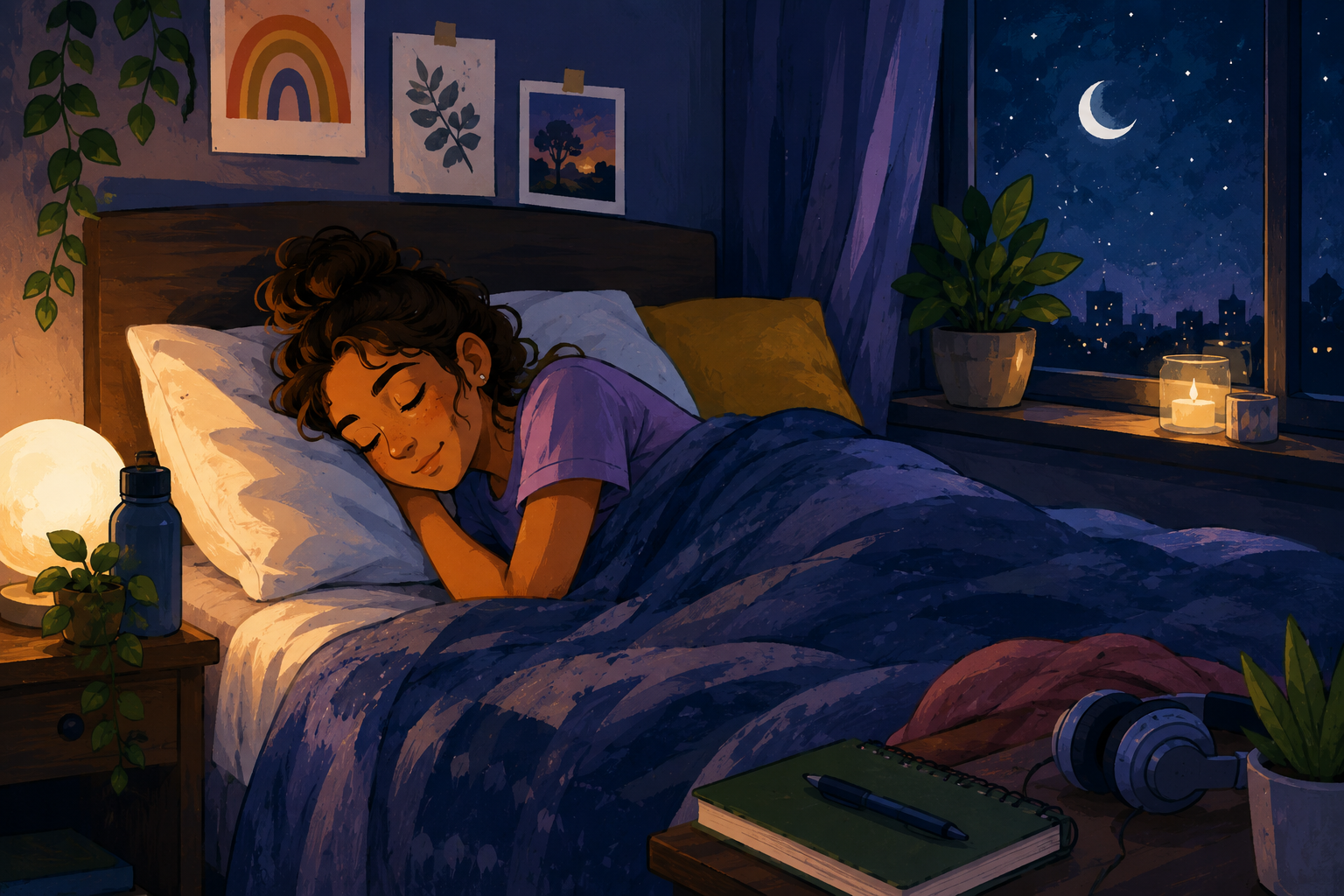
Sleep

Sleep is one of the most important things for your physical and mental health. Your body uses sleep to repair, grow, recharge and reset. Your brain uses sleep to organise memories, manage emotions, make decisions, and keep you focused.
When you’re not getting enough sleep, everything feels harder — schoolwork, friendships, gaming, motivation, and even your mood.
Good sleep isn’t a luxury. It’s a key part of staying healthy, happy, and strong.
Sleep isn’t about being lazy — it’s about taking care of yourself.
Your body needs rest.
Your mind needs space.
You deserve to wake up feeling better, calmer, and more in control.
Small changes can make a big difference.
You matter — and so does your sleep.
-
Your Body
Not sleeping enough can make you:
Tired and run‑down
Clumsy or achy
More likely to get sick
Hungry for sugary foods
Low in energy
Your Mind
Poor sleep can make you:
Irritable or moody
Stressed or overwhelmed
Forgetful or unfocused
Struggle with schoolwork
Feel low or anxious
Your Emotions
Lack of sleep can make small problems feel huge.
When you’re rested, it’s easier to:Stay calm
Think clearly
Make good decisions
Handle stress
Sleep is your mind’s reset button.
-
Most young people need 8–9 hours of sleep each night — sometimes more.
Your brain is still developing, which means it needs extra time to recover.If you're regularly sleeping less than 7 hours, your body and brain might be struggling even if you don’t notice it straight away.
-
You might notice:
Falling asleep in class
Struggling to wake up
Feeling tired all day
Being moody or emotional
Losing motivation
Headaches
Trouble concentrating
Staying up gaming or scrolling late at night
If these sounds familiar, your sleep might need attention.
-
Lots of things can get in the way of good sleep:
1. Phones and Screens
Phones, tablets, TVs and gaming devices give off blue light that tricks your brain into thinking it’s daytime.
2. Stress or Overthinking
Worrying about school, friendships, family, or social media can keep your brain awake.
3. Late‑Night Gaming
Games keep your brain alert and pumped with adrenaline, making it harder to switch off.
4. Irregular Routines
Going to bed at different times each night confuses your sleep cycle.
5. Snacks or Energy Drinks
Energy drinks, chocolate, fizzy drinks, or caffeine can keep your body wired.
-
✅ 1. Create a Sleep Routine
Try to go to bed and wake up at similar times each day.
Your body loves patterns.✅ 2. Turn Off Screens
Switch off devices at least 1 hour before bed.
Your brain needs time to wind down.✅ 3. Make Your Room Comfortable
Dim lights, cosy blankets, and a quiet space can help your body relax.
✅ 4. Avoid Caffeine in the Evening
Energy drinks and fizzy drinks can stay in your system for hours.
✅ 5. Wind Down Properly
Try:
Listening to calm music
Reading
Drawing
Breathing exercises
Stretching
✅ 6. Talk About What’s on Your Mind
If you’re stressed or worried, talk to someone you trust.
Keeping it inside makes sleep harder.✅ 7. Keep Your Bed for Sleeping
Try not to do homework, gaming, or scrolling in bed — your brain gets confused.
-
If your mind races when you try to sleep:
Write worries down before bed
Try slow breathing (4 seconds in, 6 seconds out)
Remind yourself you can think about it tomorrow
Focus on sounds around you or relaxing music
Your thoughts feel bigger at night — but they’re easier to deal with in the morning.
-
Sleep and mental health are strongly connected.
When you sleep well:
You handle stress better
You feel more confident
You think more clearly
You have more energy
Your mood improves
When you don’t:
Anxiety increases
Low mood becomes harder to manage
Problems feel more overwhelming
Your brain struggles to focus
Improving sleep is one of the simplest ways to boost your mental wellbeing.
-
If you’ve tried everything and still struggle with sleep:
Talk to a trusted adult
Ask a teacher or youth worker for support
Speak to a GP if your sleep is affecting your health
You’re not “being dramatic” — sleep issues are real and deserve attention.
Resources
What Happens To Your Body And Brain If You Don't Get Sleep | The Human Body
6 tips for better sleep | Sleeping with Science, a TED series
6 tips for better sleep | Sleeping with Science, a TED series